
“MAKE SURE you cut off all the green stuff,” I say to my little sister.
Eva’s black pigtails are a mess. Loose strands fall to the side as she tilts her head. She squints at the block of cheese. “I don’t see any green.”
“Right there.” I point to the streaks of mold along one corner.
“Oh.” She clenches the butter knife in her chubby six-year-old hand and stabs like she intends to murder the mold. Her cheeks are flushed from earlier. She’s too young to be left home alone, so I had to take her with me to play tag with my friends. She does her best to keep up with eleven-year-olds twice her size. We made a rule to walk, not run, whenever she’s it, which is often.
I turn to the loaf of stale bread and check it for mold as well. We get these loaves free each week from Mr. Park’s store, where my dad works. He lets us have anything that’s past the expiry date. After cutting off the moldy parts, I carefully balance each slice in the toaster. Weirdly shaped bread slices tend to fall to the bottom and burn. I’m glad it’s only the smell of fresh toast that fills the apartment when I’m done. Eva hands me her hacked-up cheese chunks, and I place them between the slices.
“Let’s make juice too!” says Eva as she stands on her tiptoes to open the top freezer door. She hops like a pogo stick but fails to reach the last can of frozen grape juice at the back.
“I’ll get it,” I say while bopping my head to Wham!’s “Wake Me Up Before You Go-Go”on the radio. It’s my favourite song and number one on the charts today.
The frozen juice breaks apart into ice crystals as I drop it into a pitcher and jab it with a wooden spoon. Eva loves stirring. She’s already perched on the chair like a baby bird. After I add water, I hand her the spoon, and she swirls the liquid with passion. Her eyes grow wide with the mini tornado she generates. Mom caught her dropping cotton balls, Lego bricks, and Barbie accessories in it once. Eva said she wanted to see what would happen to them if they got caught up in a real twister. We didn’t end up having any juice that day. There were other juice cans in the freezer, but we weren’t allowed to make a new batch. I don’t see why I had to be punished with her since I wasn’t even involved in her mad science scheme.
“I don’t want to eat cheese toast,” says Eva, eyes still glued to the whirlpool in the pitcher. “I want jjajamyun.”
I think about the savoury black bean noodles, a favourite Korean-Chinese dish of ours, and say, “I don’t know how to make jjajamyun.”
“We can make it up!”
“No, we can’t.”
“We can get it at the Korean restaurant.”
“We don’t have any money.”
“But I want jjajamyun!” she whines.
“Then tell Mom to make it for you.” But I regret saying that. Mom’s too busy to cook these days. I can’t remember the last time she made us something that didn’t come out of a can or a frozen meal box.
“When I have my next birthday party, I’ll ask her to make jjajamyun.” She lifts the wooden spoon out of the pitcher, and it splashes purple droplets onto the table.
“I don’t think your friends will want to eat it.” I get a cloth and wipe up the mess as I take the spoon from her.
“But it’s so delicious! If they taste it, they’ll love it.”
“They’ll think it’s worms,” I say, remembering my best friend, Maddie. I was so excited to share it with her, but she scrunched up her face and said it looked like a bunch of wiggly worms. She refused to taste it. I never offered her another Korean dish after that.
The phone rings. We both freeze and look at the lemon-coloured receiver mounted on the kitchen wall. It stops after two rings. Ten seconds later, it begins to ring again. This is a code to let us know that it’s either Mom or Dad calling. We’re not allowed to answer any other calls.
I turn down the radio and pick up the phone. “Hello?”
“Hi, Suzy, it’sMommy.”
“Hi, Mom.”
“Um, did you have okay day?” Her broken English sounds stronger over the phone.
“Yes. When are you coming home? You’re already late.” Eva stalks over to me and tries to wrestle the spoon out of my hand. I hold it up high so she can’t reach it.
“Um, I’m at hospital with Daddy.”
“What? Why?”
“Something happened to Daddy, but you don’t worry.” Her voice wavers, and she clears her throat. “I ask Julie-emo to come to our home, but she can’t come until 9:30 tonight.”
“Is Dad okay?”
“Don’t worry. He be okay. There was a robber at store. Your appa got hurt and I waiting to hear from doctor.” She sounds like she’s stifling a sob, and my stomach drops. “Take care of Eva. I call back soon. It be okay.”
“Mom, what’s going on?”
“No worry. I tell you later,” she insists. “Make sure you eat something. And don’t answer door unless it’s Julie-emo.”
“Why can’t you just tell me now?”
“I have to go, doctor’s calling me. We talk again soon.”
“But, Mom–”
She says a quick “goodbye” and hangs up the phone. I sigh and return the receiver to its cradle.
“What did Mommy say?” asks Eva as she tries again for the wooden spoon. I let it go without a fight this time.
“Um.” I search for words, not sure how much to tell her. “She says that we’re eating dinner by ourselves tonight.”
“Again?” She’s back at the table, swirling the juice.
“She says Julie-emo will come later.”
“Why?”
“Because Mom’s going to be very late.”
“Why?”
I shrug.
“Is Daddy going to be late too?” she asks.
“Yeah.”
“Why did you call Aunt Julie, ‘Julie-emo’? We should only speak English, like my teacher told us to.”
“I don’t know. I just forgot.”
A knot forms inside my stomach, but it’s a small one, so I can dismiss it. It’s fresh among the other knots that formed since being put in charge of Eva when I turned nine. I take the spoon away from her again and wipe up the juice she’s splattered on the table. I pour the juice into plastic cups and set the table so we can eat. But I have no appetite. A million ideas of what could’ve happened to Dad flash through my mind. Did the thief have a weapon? Did Dad have to fight him? Dad learned taekwondo when he was younger, but said he wasn’t very good. I barely hear Eva when she says something about tea parties with her Barbie dolls and Care Bears while devouring her sandwich. She pulls me out of my thoughts when she asks if her friend, Candice, can come over.
“It’s getting late. I’m not sure if Mom would want that,” I say.
“Why not? She let us before.”
“But that was before.”
“What’s the difference?”
“It’s just different!” I say louder than I mean to.
She glares at me for a moment, then asks, “Are you going to have your sandwich?”
I hand over my plate, and she stuffs the sandwich in her mouth. At least she remembers to say “thank you” through a mouthful of cheese and bread.
The rest of the evening, we lounge in front of the TV. Silver Spoons is on. Ricky’s blonde hair and blue eyes are mesmerizing. I wonder about dying my hair. It’s jet black, but I wish it weren’t. Even a tiny bit lighter would be nice. We melt into the couch through Punky Brewster and Knight Rider. Then an insistent knock at the door makes us jump.
“Ji-Eun-ah, it’s Julie-emo, open the door,” says a familiar voice.
I tiptoe to the peephole to confirm it’s her before unlatching the chain lock and the two deadbolts.
“Ji-Eun-ah.” She’s the only one to call me by my Korean name. “I thought you’d be ready for bed by now.” She gives me a quick hug and sets down her overnight bag. She beckons for Eva to come and picks her up like a baby. “Did your uma tell you what happened to Appa?”
“What happened to Daddy?” Eva asks, squirming out of Aunt Julie’s arms.
“He had a little accident. He’ll be fine, but he’s still at the doctor’s.”
“What kind of accident?”
I stare at Aunt Julie, wondering if she’ll reveal more details than my mom did, but Eva speaks before she can respond.
“Did he skin his knee like I did on the playground the other day?” She points to an angry red scab on her leg.
“Something like that,” Aunt Julie replies. She removes her shoes and locks the door behind her. She’s wearing baby blue slacks and a stylish blue and white knit top. Her sleek bob cut is a little messy, but she smooths it in the hallway mirror, setting it right again. “You girls have school tomorrow?”
“Yeah,” we say at the same time.
“Then go get ready for bed. It’s late.”
Aunt Julie heads to the kitchen, muttering to herself in Korean, a language I’ve been losing since our teachers restricted it. I can only understand a few words like “what a mess” and “how gross.” We hear a clatter of dishes as we head to the bathroom to brush our teeth.
The phone rings while we’re changing into our pyjamas. I leave Eva to wrestle with her buttons. Creeping into the hallway, I try to listen to Aunt Julie’s side of the conversation since I know she’s talking to my mom.
“What are you doing?” I jump in surprise at Eva’s voice behind me. She stares at me with raised eyebrows.
“I was just . . . Why are you sneaking up on me?” I demand.
“I wasn’t sneaking. Why are you just standing here?”
“Never mind.”
We hear Aunt Julie hang up the phone. I usher Eva back to our room.
“What did you hear?” Eva asks while scuttling beneath the covers. “I know you were eels-dropping.”
“What’s eels-dropping?” asks Aunt Julie as she breezes through the doorway. “I didn’t know you had pet eels!”
“She means eavesdropping,” I say before I can stop myself.
Aunt Julie gives me a knowing nod. “Your uma says the doctor wants to keep your appa overnight. He has a head injury.”
“Is that really bad?” I ask while glancing over at Eva, unsure if she should hear this part of the conversation.
“Well, he’s in one piece, so I think he’ll be fine.”
Relief washes over me at the sound of her words. The knot that was tightening in my gut loosens.
Aunt Julie kneels by me as I get into bed. “Your appa’s okay. Don’t worry. Now, goodnight,” she says.
She plants a kiss on my cheek and several on Eva’s while she tucks her in. She’s about to shut the door when Eva hollers, “Leave it open!” Aunt Julie only closes it halfway.
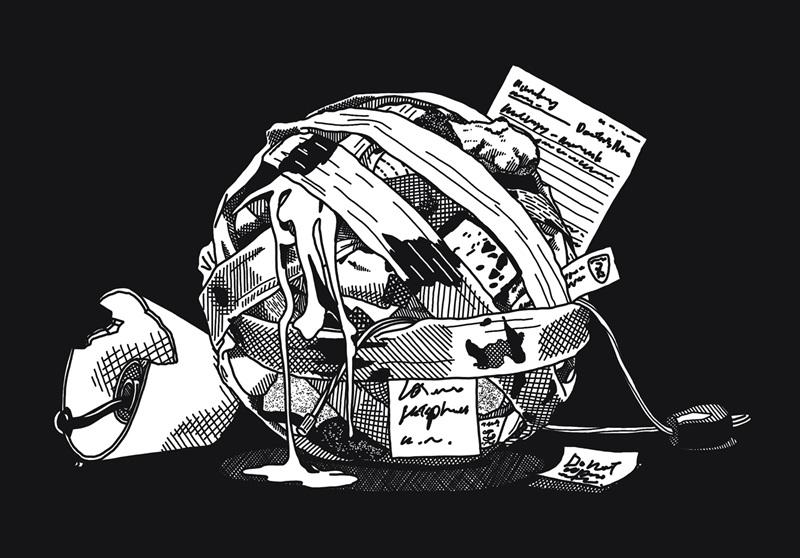
I let myself relax and feel the comfort of having Aunt Julie be the adult. I play the role of grown-up whenever it’s only me and Eva. There are days when Mom and Dad are home but so tired from work that she’ll come to me when a toy’s too high on a shelf for her to reach, or she needs help with homework, or wants a snack. I hold onto the knots in my stomach until someone else takes charge. Only then can I untangle the rope. But lately, that hasn’t happened. I just grow new knots while the old ones become tighter.
Sleep comes in spurts. As the night stretches on, I wake to the phone’s ringing or Eva’s snoring. It’s strange how such earth-shattering sounds can come from someone so small.
In the half-light of dawn, the chain on the door rattles. I wake with a start, feeling like I’d slept for only five minutes. Feet patter about the apartment along with whispering. Careful not to wake Eva, I get out of bed and peek out of our half-open door. I see Mom guiding Dad along the hallway while Aunt Julie follows. He’s hunched over and takes staggering steps. In the dim light, I see what appears to be white cloth wrapped around his head. I don’t mean to, but I gasp. Aunt Julie sees me.
“Go back to bed. It’s okay, your appa’s home now,” she whispers as she steers me to my room and tucks me in like I’m Eva.
IN THE MORNING, Aunt Julie nudges my shoulder to wake me. She tries the same with Eva, but Eva doesn’t stir. She gives up and asks me to try instead. But first, I wash and get dressed. When I return to prod my sister, she burrows deeper under the covers. Leaning on Eva’s bed, I shake her, but she whines and rolls herself in her blanket like a burrito.
“You’re going to be late for the bus. I’m not waiting for you!” I announce.
The threat works. Eva creeps out of bed like a drunken sloth before I head to the kitchen. I pass the living room and notice a blanket neatly folded on the couch where Aunt Julie slept. I find her in the kitchen, sitting with my mom. The dark circles under Mom’s eyes look extra heavy today, and her short hair is sticking out everywhere. She’s dressed to go to work but looks like she aches for bed. My mom pulls me toward her and places a sleepy kiss on my cheek.
“How’s Dad?” I ask as I pour milk over my cereal.
“He okay,” she says. “Hospital not let him sleep. Said he shouldn’t. But he so tired. I bring him home so he can sleep.”
Aunt Julie scowls and shakes her head. “Your uma should listen to the doctor.” She and Mom exchange a look before she turns to me and asks, “You and Ji-Min know how to get to school on your own, right?”
“We take the school bus.”
“Good. I have to drive your mom to work. Your lunches are packed.” She points to the counter where two brown bags sit side by side.
A sudden crash comes from down the hall. At first, I think maybe Eva dropped something, but then she appears in the kitchen asking about the noise too. We all hear a deep, agonizing moan. Mom and Aunt Julie rush to my parents’ bedroom, and I follow.
We find my father face down on the threadbare carpet. Beside him are broken shards of the bedside lamp, scattered like puzzle pieces. He’s holding his head so I can’t see his face. Mom crouches and pulls his hands away.
His head is wrapped in a thick white bandage with a splotch of dried blood beneath it. It reminds me of an ancient mummy from a scary movie. Fear prickles along my body. I can hear my heart beating in my ears. My legs feel stiff like they’re made of cement. Mom and Aunt Julie are speaking, but their voices are muffled. It’s Aunt Julie who unfreezes me with a nudge when she rushes from the room.
I press myself against the wall and stare at the person sprawled on the floor. He looks like my father, but it can’t be him. Dad’s strong and sturdy. This man is broken and weak. And he scares me. The man on the floor lets out another groan, moaning about the pain he’s in.
Aunt Julie returns with a glass of water and a bottle of pills. She hands them to me as she and Mom help the groaning man back into bed. I stare while Mom takes the bottle from me and gives him a few pills to swallow.
“–a vacuum and garbage bag,” I hear my aunt say, but her voice sounds like it’s underwater. I feel a hand on my cheek, turning my head away from the man. “Ji-Eun-ah. Ji-Eun- ah . . . Suzy!”
I blink and see my aunt looking down at me with a frown.
“Did you hear me?”
“W-what?”
“Go get the vacuum and a garbage bag for me.”
“G-garbage bag, vacuum,” I mouth the words and turn. With each step leading me away from the scene, I feel my head clear.
In the kitchen, Eva is sitting with an untouched bowl of cereal in front of her. Her lips are pressed tight. Her eyes are wide and glistening, and they follow me as I find a plastic bag. She appears smaller than usual in oversized hand-me-downs.
I know she’s scared. I say gently, “It’s okay. Eat.”
She wipes a tear with the back of her hand before picking up her spoon and asking, “What’s wrong with Daddy?”
“I think he fell out of bed. Mom’s giving him medicine.”
She nods slightly and takes a timid sip of milk from the edge of the spoon. Most of it drips down her chin. She doesn’t seem to notice, so I take a napkin and wipe it away.
I pull the vacuum from the hall closet and hand it, and the bag, to my aunt. I stand in the doorway. I don’t want to go back inside.
“Is he okay?” I ask.
Resting a hand on my shoulder, Aunt Julie smiles. “Don’t worry, he has his medicine now. Go finish breakfast.”
Taking my seat next to Eva, we eat in silence. My cereal’s gone mushy. I have no appetite. Eva doesn’t look hungry either. She slurps only the milk, chocolatey and sweet, from her soggy Cocoa Puffs.
I DON’T REMEMBER A TIME when my father ever stayed home from work before. But now, he lingers around the apartment like he’s haunting the place. After dark, we hear eerie groans and stirrings. Eva and I catch glimpses of his pale face and bony features. He’s often lying in his room, wrapped in his bedsheets, though he doesn’t float or pass through walls like a real ghost does.
While Mom and Aunt Julie care for the ghost, Eva and I find ways to avoid being at home. It’s nearly summer, and kids flock to the park every evening. Some neighbourhood kids found out what happened to Dad. I heard his brains got splattered, or I heard he’s dead, are the worst of their cruel words.
We ignore them, but what Maddie says stings the most: “My mom says he’ll probably be a cripple for the rest of his life or become a crazy man on the streets.” I walk away fuming until she half-apologizes – but then she adds, “I’m only telling it like it is.”
I’m not sure I want to be friends with her anymore.
For two weeks, Mom’s home and Aunt Julie comes by to help. Then Mom’s boss threatens to fire her if she doesn’t return to regular shifts at the bottling factory. Aunt Julie offers to stay with us, but Mom says she should focus on her university studies. This means I must watch over the ghost as well as Eva.
IT’S BEEN THREE WEEKS since the attack. It’s Thursday after school, and I stand in front of the bathroom mirror. After brushing my straight, jet-black hair, I pull it up into a bun and examine the updo. I look nothing like the models in the fashion magazines or the celebrities in movies. These women have long, fluttering eyelashes and eyes that are perfect spheres of blue, green, and hazel. My eyes will never be round and doe-like. I stare at my slanted eyes, under hooded lids, and inspect my splotchy skin. I wonder why I was born to look this way when a sudden knock disturbs my solitude.
“S-S-Suzy,” my father stutters. This is something new. He never had trouble speaking before. Though his Korean accent is strong, he has always been fluid with words. That is, until now.
I open the door, expecting him to need the toilet. In the beginning, his headaches and nausea were bad, and he had trouble holding down food. But he doesn’t rush past me. Instead, he’s squinting at the light and leaning on the doorframe. He opens his mouth to speak, but the words are stuck.
With effort, he says, “Your m-m-mommy…”
“Mom’s not home,” I say, finishing his sentence for him.
He shakes his head. “S-s-she’s on the . . .”
“She’s at work,” I add.
“Yes, but, s-s-she . . .” he sighs and stops. He brings his hand to his ear, mimicking a telephone.
“Oh, she’s on the phone?”
“Y-yes.”
I walk past him to the kitchen and find the phone receiver dangling by its curly cord. I pick it up. “Hello, Mom?”
“Ah, Suzy, good.” She sounds relieved. “I sorry, Suzy. I must stay at work. Factory has new shift for me, and I need to take it.”
“Oh,” I respond. Since Dad’s been recovering, Mom’s been taking extra shifts.
“Daddy have doctor appointment, but I can’t take him. Can you go?”
“You want me to take him to the doctor?” I ask with unease.
“Yes, just take Daddy on bus to Broadview Station and then change subway at Yonge and Bloor to go south.”
I let out a wavering breath. “Is Aunt Julie not around?”
“No, she writing exam at school. Don’t worry, Daddy know where to go, but lights and noise still bother him. So, he need help.”
“Um.” My mind races to find a way out of this, but my mom cuts in.
“Eva still at Candice house, right?”
“Yes.”
“When you have to pick up?”
“Candice’s mom said anytime.”
She instructs me to pick up Eva after the appointment and gives detailed directions to the doctor’s office. When I hang up the phone, the tangled rope in my gut coils and bunches, taking up more space within me. I’ve only spent a few minutes at a time with Dad since he’s been hurt. He usually sleeps and only wakes to eat a little. As his chosen guide on the transit system, I’ll have to stay with him for hours. Mom keeps telling Eva and me that he’ll be back to normal soon. I hope she’s right. Being mostly scrunched up in bed, hiding in the dark, I wonder how the outside world will feel to him. And to me.
As I come out of the kitchen, my dad shuffles to the foyer and sits on the bench with a grunt. I watch while he prods a shoe with his foot. His skinny frame slouches and teeters. He reminds me of my grandfather before he died, ancient and frail. I don’t know much about how badly he was injured. No one will tell me the full story. I did overhear some of what happened when my mom spoke about it with Aunt Julie. Most of the conversation was in Korean, but I gathered that Mr. Park’s wife was at the cash register when a man came in demanding money. My dad ran to help, startled the robber, and got hurt. Part of me feels proud of Dad for coming to her rescue, but another shameful part wishes he hadn’t.
As he struggles with the shoe, the look on his face reminds me of Eva. My heart twists. I force myself to move to help him. His feet are much bigger than Eva’s, but the motion is the same. I retie his laces and double-knot them, so they don’t come undone. His hand rests atop my head, and I look up at his wearied face. Instead of white bandages around his head, he has a large one above his left temple. His thinning hair is greyer than I remember.
He smiles at me. I see a flicker of his old self. It takes me back to when he was proud of me for getting A’s on my report card or for helping Mom with chores. But the moment passes, and he’s worn out and old again. Realizing that he relies on me now, I stuff my nerves down deep and help him out of the apartment.
I look inside my Hello Kitty purse to check for bus tickets. But before we get to the elevator, my dad pats his pockets and looks around. I know he’s left his wallet behind. We go back. It takes a few minutes for me to also find his sunglasses and a hat that doesn’t press down on his bandage before we leave.
He moves like a snail, stopping often to catch his breath. When we get to the bus stop, he’s panting, and I worry. When the bus arrives, he pulls himself up the huge steps, gasping. I can feel all the other passengers eyeing us. We find a two-seater near the front, and he sinks into the seat. The woman across from us looks wary as Dad’s face turns green when the bus lurches forward.
The stairway to the subway platform is another matter. I scowl at the broken escalator. I understand why my grandfather used to say that to be still is to be useless. I know he was talking about people, but if an escalator is motionless, what good is it? My dad shuffles to the stairs and clutches the handrail. He takes a nervous step. I hold his other hand, doing my best to support him. An incoming train pushes the air against us from below. The muffled echo of an announcer’s voice rises with it, followed by two clear tones of a whistle. Dad stops and leans against the wall as a mob of exiting subway riders swell toward us. They part for us like rainwater flowing around a pile of street litter.
As the tide of bodies ebbs, my dad wobbles forward again. Ten minutes later, another train pulls in, and we board with shuffling steps. I remind myself to keep an eye out for our stop as my dad slumps in his seat.
It’s a comfort to feel the rattle of the train beneath my feet. I’ve been on many trips with Dad and Eva on the subway. He’s the one who takes us to our appointments, meets with our teachers, and buys us Happy Meals from McDonald’s. Mom’s not comfortable being out in public because her English isn’t as fluent as his.
When we get to our stop, I’m relieved this escalator’s working. But my dad hesitates as if he’s forgotten how to navigate the shifting steps. I remember Eva as a preschooler, holding my dad’s hand, looking fearfully at the moving metal staircase. Dad would hoist her on with a strong arm, and she’d cling to his leg the whole way. She couldn’t get her stubby legs to match the timing of the disappearing steps at the end. He would catch her when she stumbled. But I know I won’t be able to catch my dad if he falls. I’m grateful when he does manage it. But just barely.
The appointment is at St. Michael’s Hospital. We sit quietly in a fourth floor waiting area as other patients and staff pass by. The wait is excruciating. Dad eventually nods off. I nearly do the same when I hear shouting from down the hall. I lean forward in my seat and stare down the long corridor. A man in a backward gown, wearing socks on his feet, is screaming and flailing his arms. His face is beet red with veins popping from his temples. Two policemen rush over and wrestle him to the ground. I get a clear view of him and see a long scar along his forehead, shiny and white against the ruddy strain of his face. I look over at my dad and wonder if he will have a scar like that, too. I shudder.
An hour later, the doctor finally sees my dad. I’m asked to sit on a bench outside his office door while the doctor examines him. When he’s finished, he pokes his head out and motions for me to enter. He has a shock of white hair much like Albert Einstein. I take a seat next to my father as the doctor sits behind his desk. The entire office is beige. The carpet, the chairs, the window blinds – all beige. Framed medical certificates hang on the wall above his head, along with pictures of smiling, blue-eyed children. I think the doctor’s eyes are blue too, but it’s hard to tell behind his bushy, grey eyebrows and coke-bottle glasses.
“My name is Dr. Olevsky, I am a neurologist.” He speaks with a heavy European accent. “I am your father’s doctor for his concussion. What is your name, young lady?”
“Suzy,” I squeak.
He nods and leans forward, interlacing a set of thick, hairy fingers. “I have explained to your father that his recovery will take time. But he insists he will go back to work next week. I advise against this. I have written a note for your father’s employer and his primary caregiver to this effect. Now, how old are you, Suzy?”
“I’m almost twelve.”
“Ah, good, good. I will give you this note to keep safe and help explain what I have said to your father’s caregiver.”
I’m not sure what he means by caregiver. “Who?”
He tilts his head a little: “It is your mother that takes care of him, yes?”
I nod, although I think it might be me since Mom’s always at work.
“Tell her your father needs more time to rest and recover. It is taking longer than expected, but it is best not to push these things. So, no work.”
I look to my dad, who gives me a weak smile. I turn back to Dr. Olevsky and nod.
DAD DROPS INTO BED the moment we’re home. I know he’s exhausted. I am too. But I head back out to the next apartment block to pick up Eva from her friend’s house. She’s sulky and drags her feet along the sidewalk.
“I wanted to stay at Candice’s for dinner,” she grumbles.
“Mom said I had to pick you up now, so I did.” I take longer strides to hurry her along, but it only widens the distance between us.
“Is Daddy home?” she asks.
“Yes.”
“Is he sleeping?”
“Yes.” Before we reach our lobby door, I slow my pace and wait for her to catch up. “The doctor says he’ll get better, it’s just taking longer than it should.”
She looks up at me, unconvinced. “What if he never gets better?”
I wonder the same thing, so I don’t respond.
BY THE TIME MOM’S HOME from work, Eva and I have had our dinner. Dad remains asleep in his room. I tried to wake him earlier to have some soup, but he asked that I leave him alone.
Eva used to jump into Mom’s arms whenever she came through the front door, but these days she keeps her eyes on the TV. Mom looks haggard. The circles under her eyes haven’t faded. I wait until she’s eating dinner in the kitchen before handing over the doctor’s prescription and note. Mom nods as I explain Dr. Olevsky’s instructions.
“Daddy and Mommy so proud of you for helping. But, Daddy have to work,” she says between bites of rice and kimchee.
“The doctor said he shouldn’t.”
“I know. But he need to.”
“If he works, how will he get better?” I know my tone is accusing.
She puts down her chopsticks. “Mr. Park will have to hire someone else if Daddy doesn’t go back to work.”
“Shouldn’t Mr. Park be grateful?” I snap. “Dad did save his wife. Shouldn’t he help Dad get better instead of forcing him to work?”
“He not forcing Daddy to work. Mr. Park wants to help, but he has business to run.”
“But Mom, the doctor said–”
“You no worry, Daddy will get better. We need your help with Eva–”
“I already help with Eva! All. The. Time,” I say through clenched teeth. I don’t know why, but my heart is racing, and my face feels hot. I ball my fists until my fingernails dig into my palms. “What if he gets worse? Do you even know how hard it was for him to walk to the bus stop? Do you know that he just stays in bed all the time? That I can barely get him to eat, and he’s always in pain?”
My mom gapes at me. Her eyes are glistening, but I can’t seem to stop myself.
“Every day, I take care of Eva. I go to school. I do my homework. I make dinner. I try to make him eat something. I wash the dishes. I give Dad his medicine. But he doesn’t get any better.”
She shakes her head – not in denial, more like she’s in pain. A river of tears runs down her cheeks. I want to say more, but she suddenly seems tiny and frail. I realize how tall I’ve grown as I stand towering over her. Something in the smallness of her body makes me feel ashamed of myself. My stomach is like a woven mess. I hold the knots tight so that I don’t unravel. Reluctantly, I reach for her, and she pulls me into a hug. She sobs harder while I swallow my own tears. I feel the rope burn as it twists and tightens into something solid and hard as stone. I hold my mom in my arms, knowing she’ll never be able to release the tangled mass within me.

Eleanor Chun is a freelance writer and author of the children’s picture book, Invisibles, which Kirkus Reviews calls "An engaging (…) tale about limiting screen time." She was named a finalist in the Penguin Random House Canada Student Award for Fiction 2024 and longlisted in the CBC Short Story Prize 2022. Her work-in-progress middle-grade novel made the shortlist (as of October) in CANSCAIP’s 2025 Writing for Children Competition. She recently completed her Certificate in Creative Writing at the University of Toronto’s School of Continuing Studies. Updates on her work can be found at www.echun.com.