
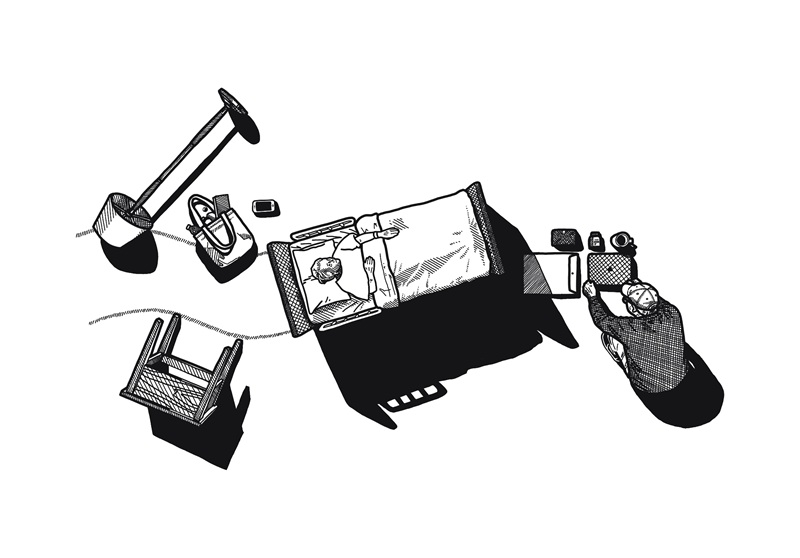
OF COURSE SHE WAS GOING TO DIE; she was counting on it. A hundred years old, she would like to hurry it along if she could, ending her last call as she often did, with the request to “pray that I die tonight.” He did not respond. Some days it felt like she was never going to die, that she and he would be in this end-of-life limbo forever. He wasn’t sure what that feeling, which always hovered on the edge of his consciousness, meant.
HE WAS SITTING in his second favourite coffee shop, warm on this cold day. He had scored his favourite table, in the back corner, small, for two at the most. From there one could look up and see the whole cafe, should one choose to do so. There was a window immediately to his left, well placed for his purposes. The morning sun would not hit his laptop screen, and neither would it get in his eyes through the window’s spotted glass. The sun would only become a problem in an hour or so, if it stayed sunny. But there was some strong overhead light, so he kept his cap on. He was fussy about light. He set his phone down and for comfort moved his wallet out of his back pocket and onto the table. The small round table, nicked and worn, was now a little crowded, but with everything properly arranged, quite workable. He nudged his phone slightly further from the edge of the
…

Leonard Diepeveen lives in Halifax, Nova Scotia. His memoir, When I Come Back We Will Talk: My Father, the War, and Me will be published in September 2026 by Freehand Books (Calgary) and has just been released in a Dutch translation by Querido (Amsterdam).